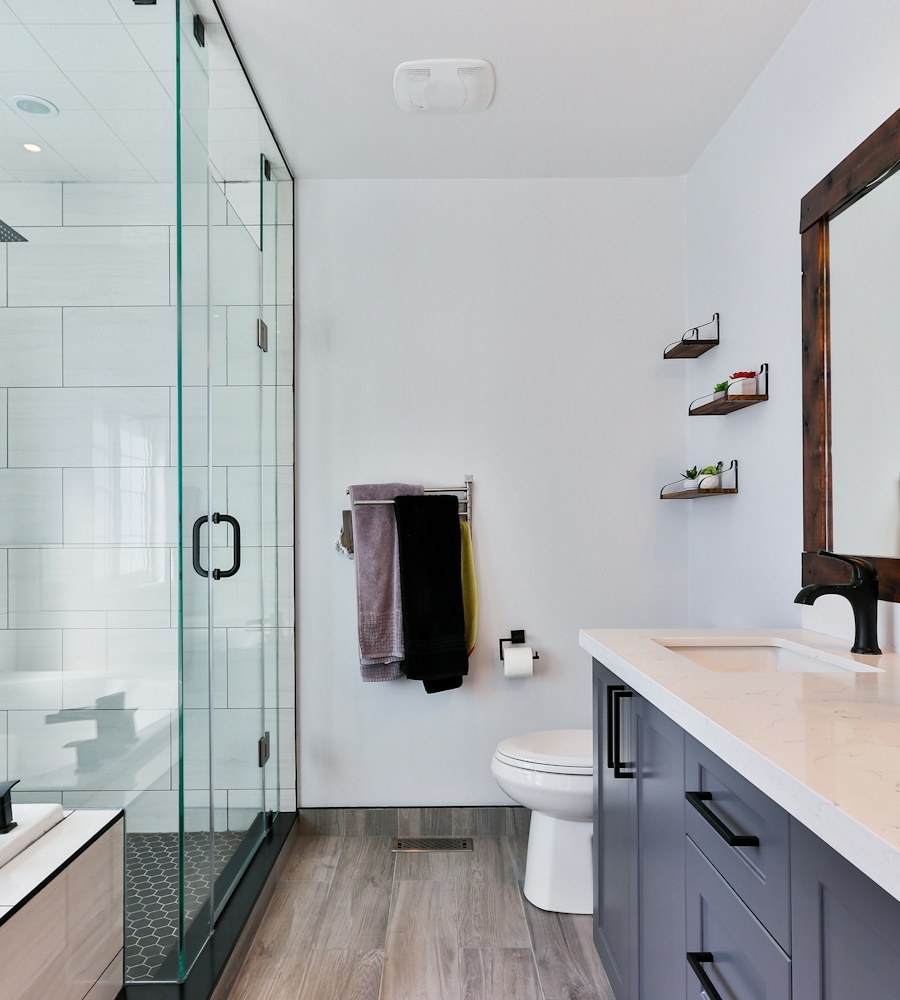
Under the sink is an awkward storage space because it is not an empty rectangular cabinet. A drain trap occupies the middle, supply lines run along the back, valves need access and water damage is easier to miss behind packed bins.
The best under-sink storage makes daily essentials easier to reach while leaving the plumbing visible.
Measure the shape of the usable space
Open both cabinet doors and remove everything. Check for damp marks, softened cabinet material, stains or a musty smell before putting items back. If you find a leak, notify maintenance rather than covering it with a plastic organizer. The EPA explains why persistent moisture needs attention.
Record four measurements in inches:
- Interior width: from inside wall to inside wall, excluding hinges.
- Usable depth: front edge to the nearest obstruction, not merely to the back panel.
- Clear height: floor to the underside of the sink, trap or waste line.
- Door opening: how wide a bin can actually pass through the opening.
Draw a quick U-shape for the plumbing. Mark shutoff valves and the space needed for your hand to operate them.
Five storage options and who they suit
1. Two narrow side bins
Best when the trap sits centrally. Use two independent removable bins instead of forcing a wide shelf around pipes. Pull one out to reach the valves.
2. Adjustable under-sink rack
A rack with movable shelf sections may bridge around pipes, but check that supports do not rest on supply lines. The adjustment range matters more than the product's headline width.
3. A short sliding drawer
Useful for cleaning cloths or sponges. Measure its full extension, including the handle, and verify that the cabinet door opens far enough for the drawer to slide.
4. Stackable shallow bins
Good for light refills and backup supplies. Keep the stack stable, label categories and avoid placing heavy bottles high above small bins.
5. Portable cleaning caddy
A single handle caddy keeps approved cleaning supplies together and can move to the room where they are used. It should be inaccessible to children as appropriate, and products should remain in their original labeled containers.
Kitchen sink versus bathroom sink
A kitchen cabinet may also contain a garbage disposal, dishwasher hose or cleaning-product storage. Leave electrical equipment, hoses, the disposal reset button and service access unobstructed.
A bathroom vanity can be narrower and more humid. Separate items that should remain dry—such as spare paper products—from wet cleaning cloths. If a container traps condensation or hides a leak, switch to a more open format.
What not to do
- Do not attach brackets or adhesive directly to water supply or drain pipes.
- Do not store cleaning chemicals alongside food or cosmetics.
- Do not cover shutoff valves or the area beneath the drain trap.
- Do not use the lowest wet cabinet space for vulnerable paper goods.
- Do not assume the advertised "adjustable" range fits your actual pipe layout.
The EPA's household product guidance supports following cleaning product instructions and safe storage practices.
A real-world buying example
If the cabinet is 24 inches wide but the central trap uses 7 inches, a 20-inch solid shelf is unlikely to help. Two 7- or 8-inch bins could fit beside the pipe while allowing removal. These are illustrative dimensions, not a standard cabinet specification: measure your actual unit.
FAQ
Can an adhesive rack go inside my rental vanity? Only if the product is approved for that surface, load and humidity and the lease allows it; removable freestanding bins are often simpler.
Should I line the cabinet floor? A removable waterproof tray can help contain small drips, but it must not conceal a plumbing problem or prevent periodic inspections.
Which organizer is easiest to take to a new apartment? Independent bins and caddies usually adapt more easily than a custom-width insert.
Sources and further reading
These references support specific planning, installation or safety guidance. Always check the current manufacturer instructions and your lease.